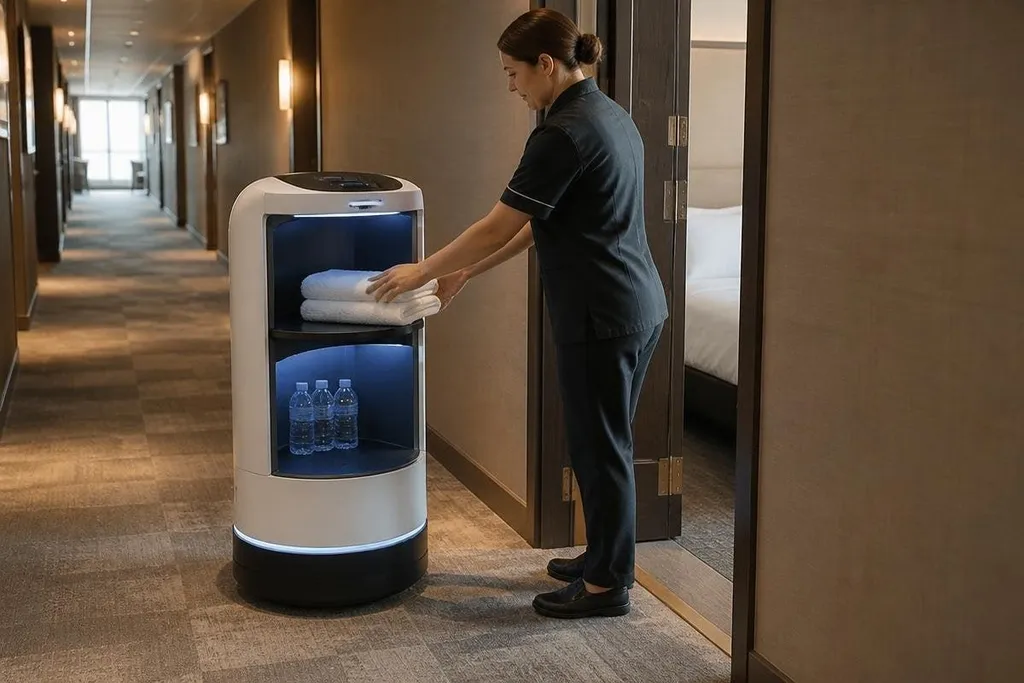
A hotel robot can carry room-service meals, towels, or supplies without asking a staff member to leave the front desk. That narrow job explains much of the interest: hotels can test the machine on one repeatable task and see where it helps.
- Robots handle short deliveries inside the building.
- Elevators, doors, guests, and staff create the hard parts.
- A useful trial needs cost, task time, and failure records.
The work fits the machine
Hotels contain many short trips. A meal moves from the kitchen to a room. Fresh towels move from a storage area to a guest floor. A robot with wheels, cameras, sensors, and a storage compartment can repeat that route without tiring.
The task also has a clear start and finish. The robot receives an item, travels to a room or service point, alerts the guest, and returns to its charging area. That makes the work easier to measure than a robot asked to handle many different jobs.
The machine doesn't need to replace a full hotel team to matter. If it carries one delivery while a staff member handles a guest request, the hotel may gain time during busy periods. That benefit depends on the robot completing the trip without frequent staff help.
Hotels offer a controlled test site
The building is more structured than a public street. Floors have fixed layouts, service areas stay in known places, and the robot can use maps of the building.
Those conditions help the system repeat routes after staff check the path and safety settings.
The building still creates problems. A lift may need a signal from the robot. A door may be too heavy to open. A guest may block a corridor, or a cleaning cart may sit across the planned route. These details decide if the robot saves work or creates another task for staff.
That is why a trial should begin with one route and one delivery type. The team can then record how often the robot completes the trip, how often a person steps in, and how long each run takes. A smooth demonstration says little if the same route fails during a busy evening.
Guest service changes the test
Hotel robots work in shared spaces, so safety and manners matter as much as movement. The machine needs to slow down near people, stop when its path is blocked, and give clear signals when it reaches a room.
The guest also needs a simple handoff. A code, phone alert, or staff message may open the compartment. Each extra step adds time, so the hotel has to check the whole delivery rather than the robot's driving alone.
Appearance matters less than predictable behavior. A robot that reaches the right floor but waits beside the wrong door still creates a service problem. Hotels need records from real shifts, not only a prepared route with empty corridors.
A hotel buyer can use hotel robot reports from Robot24.com to check the named machine, trial date, and tasks it handled during service. That record gives the cost section a firmer start, because the purchase price says little about staff time, charging, or repairs.
The costs people can miss
The purchase price is only one part of the decision. A hotel also needs charging space, software setup, building access, staff training, repairs, and a plan for blocked routes.
If a worker must watch the robot for each trip, the hotel may gain little.
The same issue applies to guest expectations. A delivery robot can carry a package, but it cannot replace a staff member who must answer a question, handle a complaint, or make a judgment about a special request. The robot needs a clear boundary.
I'd skip a hotel robot trial that measures only successful trips. The useful record includes failed runs, staff interventions, waiting time, damaged items, and guest responses.
A practical buying checklist
Use these checks before a hotel signs a trial agreement:
- Name one task: Start with room service, linen delivery, or another repeatable job.
- Map the route: Check doors, lifts, ramps, narrow halls, and guest areas in advance.
- Record human help: Log every blocked route, manual handoff, and reset.
- Count the full cost: Include setup, training, repairs, software, charging, and staff time.
- Set a service limit: Decide which guest requests still go straight to a person.
- Review failed runs: Keep the trial running only if the records show less work overall.
The reason hotel robots are becoming more popular is easy to state: their first jobs are small, repeatable, and visible to guests. The harder question is still open. Can a robot complete those jobs through a full working period without turning its problems into someone else's workload?