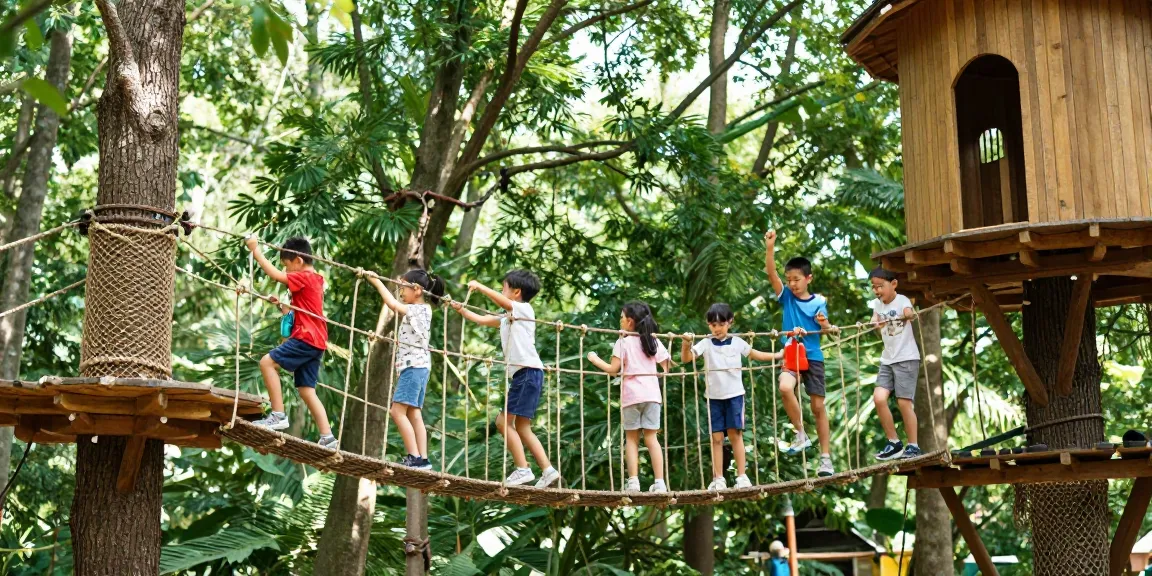
Introduction to Rope Bridge Design
Rope bridges have an enduring charm that captures the imagination, often conjuring images of adventurous treks through dense forests or across picturesque ravines. They are not only functional structures that allow for crossing obstacles, but they also serve as artistic expressions, blending seamlessly into natural landscapes. Understanding Rope Bridge design is essential for anyone interested in creating these unique structures, whether for recreational purposes or as part of a larger project such as a treehouse.
What is Rope Bridge Design?
Rope bridge design refers to the systematic approach involved in constructing bridges predominantly made of rope or cable. Such bridges can vary widely in complexity and scale, from simple pedestrian crossings to more intricate structures that span substantial distances. The design not only encompasses the aesthetic aspect but also crucial safety considerations, ensuring that the bridge can withstand the forces it will encounter through its lifespan.
The Importance of Safety in Rope Bridge Design
Safety is paramount in rope bridge design. Engineers and builders must consider various factors including load capacity, materials used, and environmental conditions. Proper tensioning of ropes, securing anchorage points, and regular maintenance play critical roles in ensuring that the bridge remains safe for use. Neglecting these aspects can lead to catastrophic failures, making awareness and adherence to safety standards non-negotiable in rope bridge projects.
Historical Context of Rope Bridges
Rope bridges have a rich history, dating back thousands of years. They were often used by indigenous peoples in mountainous regions, where traditional bridge-building materials were scarce. These bridges represented not just practical solutions to crossing gaps but also cultural significance, often featured in storytelling and folklore. Today, they continue to evolve, incorporating modern materials and design principles while honouring their historical roots.
Types of Rope Bridges
Suspended Rope Bridges: Features and Benefits
Suspended rope bridges are perhaps the most recognisable type, characterised by their ability to span considerable distances while remaining suspended above the ground or water. They typically consist of two main cables that are anchored at both ends and support the bridge deck. The primary benefit of suspended rope bridges is their versatility in locations where traditional bridge construction is impractical or too costly. Additionally, they offer a minimal footprint on the environment, making them an excellent choice for eco-friendly projects.
Fixed-Beam Rope Bridges: Best Use Cases
Fixed-beam rope bridges, in contrast to suspended designs, are more rigid and do not rely on tensioning. They often consist of a horizontal beam supported by ropes on either side. This type of bridge is generally easier to construct and maintain, making it suitable for short spans where weight limits are not a concern. Common use cases include pedestrian walkways in parks or gardens, where aesthetic appeal and functionality are both important.
Log Rope Bridges: Construction Techniques
Log rope bridges are an interesting combination of natural materials and rope. Typically constructed using wooden logs for the deck and rope for support, these bridges bring a rustic charm to any outdoor setting. The construction involves carefully selecting logs that can bear the expected load while ensuring they are securely anchored and tied. They are often used in forested areas or as part of recreational parks, enhancing the natural environment.
Key Design Principles for Effective Rope Bridges
Material Selection: Choosing the Right Ropes
Choosing the right materials is crucial in rope bridge design. The type of rope used must withstand environmental conditions, such as UV exposure and moisture, without compromising strength. Natural fibres like sisal or synthetic options like nylon or polyester may be used, depending on the application. Each material comes with its own set of benefits and drawbacks, making it essential to evaluate based on the specific needs of the bridge.
Structural Considerations: Weight and Balance
Ensuring that a rope bridge is well-balanced under potential loads is a key design principle. Engineers must evaluate the static and dynamic forces that will act on the bridge, including user weight and environmental factors like wind or snow. Proper calculations and testing are necessary to maintain equilibrium, enabling the bridge to function safely throughout its lifespan.
Design Aesthetics: Integrating with the Environment
When crafting a rope bridge, design aesthetics are just as important as functionality. A well-designed bridge will harmoniously blend into its surroundings, using colours and materials that complement the landscape. Consideration should also be given to how users will experience the bridge, fostering a connection between the structure and its environment.
Construction Process for Rope Bridges
Step-by-Step Guide to Building a Suspension Rope Bridge
- Planning and Design: Outline the dimensions and structure of the bridge, taking into account the location and intended use.
- Site Preparation: Clear the area where the bridge will be built, ensuring that the ground is stable and capable of supporting the required anchors.
- Post Installation: Install vertical posts at both ends, ensuring they are securely anchored into the ground or concrete.
- Cable Installation: Attach the main cables to the posts, ensuring they are evenly tensioned.
- Deck Construction: Lay the deck using suitable materials, ensuring they are properly secured to the cables.
- Finishing Touches: Add railings or safety features as necessary, ensuring that the bridge is safe for public use.
Common Mistakes to Avoid During Construction
While constructing a rope bridge, there are several common mistakes that should be avoided:
- Inadequate load testing before public use.
- Neglecting environmental factors such as wind and water flow.
- Using substandard materials that may not withstand wear and tear.
- Poor anchorage setup that can lead to structural failure.
- Skipping maintenance checks, which are essential for long-term safety.
Maintenance Tips for Longevity
Regular maintenance is critical for the longevity of a rope bridge. Key maintenance tips include:
- Inspecting ropes for wear and fraying at least biannually.
- Checking tension in cables and re-adjusting as necessary.
- Cleaning debris and ensuring drainage systems are clear to prevent water damage.
- Monitoring for environmental impacts, such as tree growth that may affect the structure.
Future Trends in Rope Bridge Design
Innovative Materials and Techniques Emerging in 2026
The field of rope bridge design is continually evolving, with innovative materials and techniques being introduced regularly. Emerging composite materials that offer high strength-to-weight ratios are becoming popular, providing enhanced safety and durability. Additionally, 3D printing technology is being explored for producing custom bridge components, streamlining the construction process.
The Role of Technology in Enhancing Safety and Design
Technological advancements are playing a significant role in enhancing both safety and design in rope bridge construction. Sensors can now be embedded within the bridge structure to monitor load conditions in real-time, helping to anticipate maintenance needs. Virtual reality (VR) tools are also being utilised to visualize designs before construction, allowing for better planning and execution.
Environmental Sustainability in Rope Bridge Projects
As awareness of environmental issues grows, so does the emphasis on sustainability in rope bridge projects. Designers are increasingly focusing on using eco-friendly materials and methods that minimize environmental impact. This includes sourcing local materials and prioritizing designs that reduce the carbon footprint, ensuring that the bridges harmonize with their natural surroundings.
How do I build a rope bridge?
Building a rope bridge involves careful planning and execution, starting with assessing the site and selecting appropriate materials. Following a structured design process can simplify this undertaking considerably.
What are the different types of rope bridges?
There are several types of rope bridges, including suspended, fixed-beam, and log rope bridges, each suited for different applications and environments.
How much does a rope bridge cost?
The cost of constructing a rope bridge can vary widely based on materials, design complexity, and location, typically ranging from a few hundred to several thousand pounds.
What is the simplest bridge design?
The simplest rope bridge designs often involve a basic setup with minimal materials, allowing for quick construction without extensive engineering requirements.
What materials are best for building a rope bridge?
Rope bridges are commonly constructed using synthetic materials like nylon and polyester, as well as natural fibres like sisal, each with unique advantages in terms of strength and durability.